
Calligraphy
City Lit calligraphy
A beginner-level course exploring traditional and contemporary calligraphy through demonstrations, guided exercises, script analysis and individual projects.
Choose a date before booking
Upcoming classes
1 class
About this course
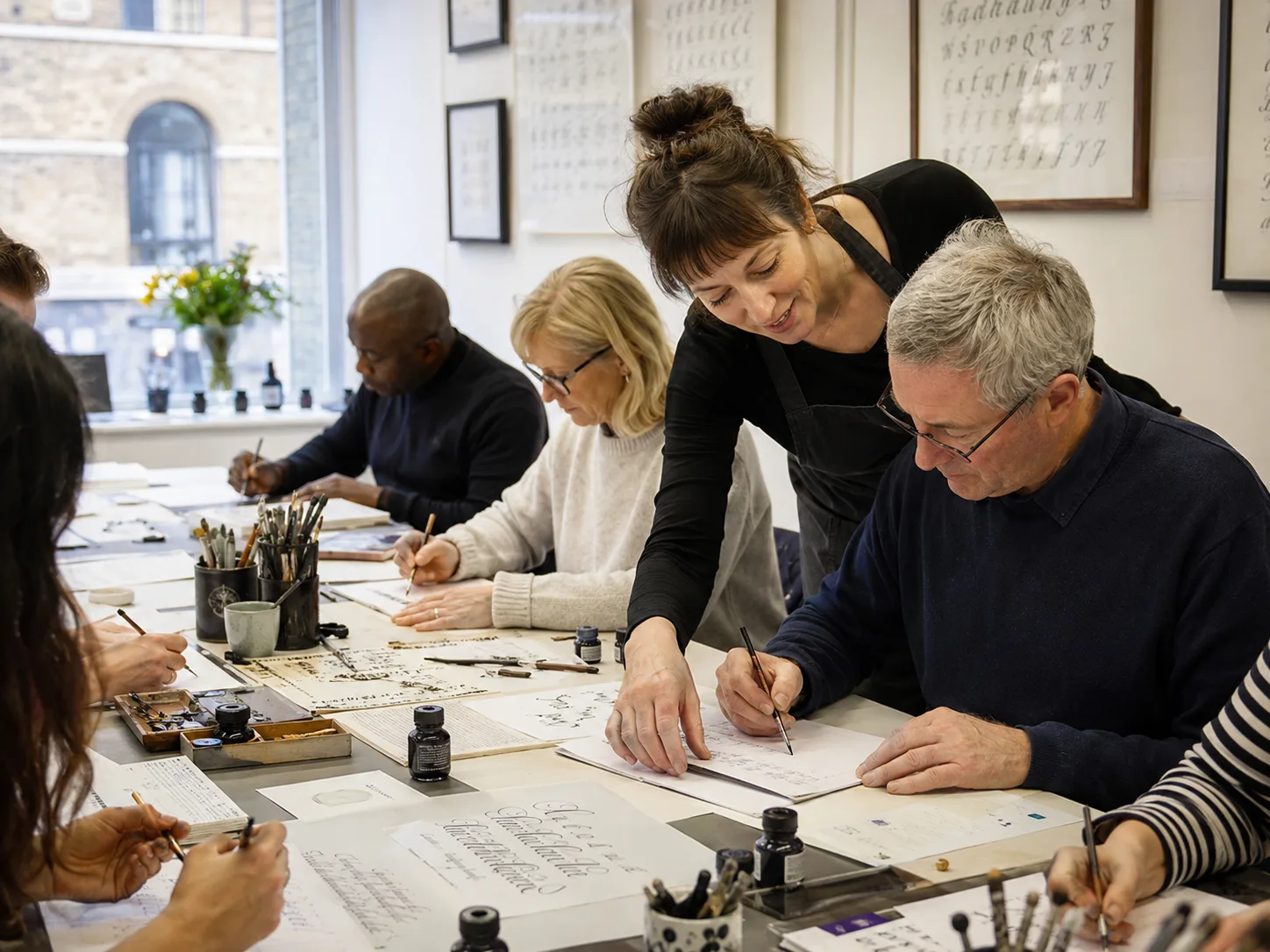
The course combines demonstrations, worksheets, historical models, practical exercises, tutorials and group critiques to examine traditional and contemporary calligraphy. Learners study six historical handwriting styles, Roman capitals and lower-case letterforms, including their structures, spatial relationships, rhythm and flow. The programme also introduces colour theory, design methods and calligraphy across different materials and contexts, with museum visits contributing to the research. As their studies develop, learners analyse a preferred script and create a personal alphabet and small project based on their findings. Teaching includes both individual work and group activities, with peer evaluation and skills sharing.
What you'll learn
- Analyse the structure, origins and characteristics of a selected calligraphic script.
- Write and distinguish Roman capitals, lower-case forms and historical handwriting styles.
- Use calligraphic materials and different media in controlled experiments.
- Apply design methods, colour theory and spatial relationships to calligraphy work.
- Develop rhythm, flow and personal patterns through sustained writing practice.
- Produce a personal alphabet and a small project informed by calligraphic research.
Is this course right for you?
The course is intended for beginners and for learners revisiting calligraphy skills. A Beginner label suggests an introduction to foundational techniques rather than a requirement for specific previous experience. Participants work both independently and collaboratively, including small-group projects, peer evaluation and discussions. Some additional research and study outside class is expected.
- Small-group collaboration is part of the course, although wider group discussions are voluntary.
- Learners are expected to maintain personal projects throughout the course.
- Simple written and spoken English is needed to follow demonstrations, read handouts and understand health and safety information.
- Some study or revision at home may be helpful between classes.
Before you go
- Some basic materials are included. As the course progresses, learners need their own tools, which may include a penholder, nibs, special inks and paper.
- The tutor will advise on suitable tools and materials during the early weeks, so nothing needs to be bought before the course starts.
- Learners should bring a sharp pencil and notebook to each class and make notes to accompany their course handouts and portfolio.