
Languages
Japanese 2 upper: module 1
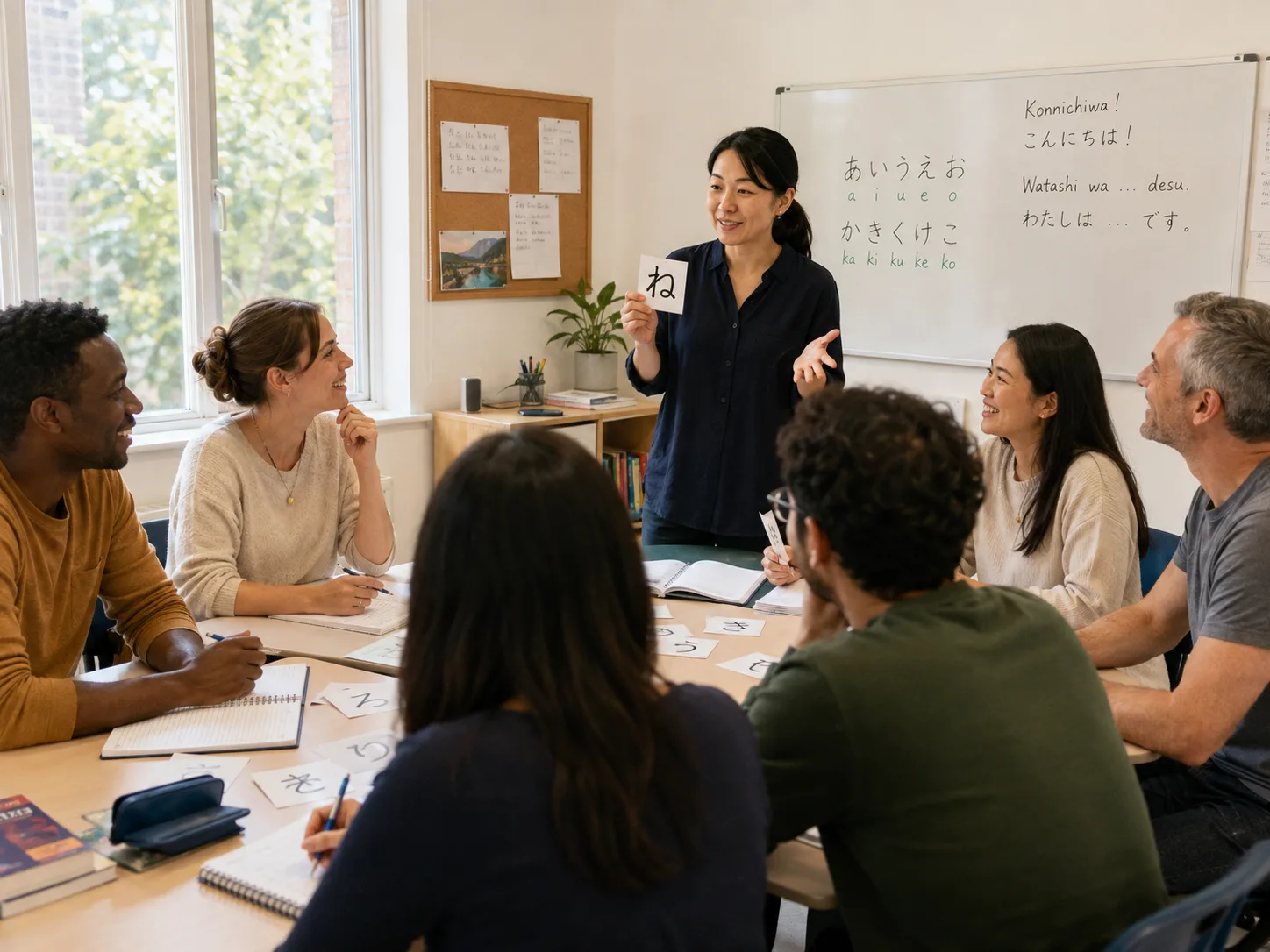
Pre-intermediate Japanese course developing spoken communication about routines, leisure, family and friends through interactive class activities.
Choose a date before booking
Upcoming classes
2 classes
| Starts | Schedule | Length | Teacher | Venue | Price | |
|---|---|---|---|---|---|---|
23 Sept 2026 Wednesdays | 14:30 - 16:00 | Short course11 weeks | JunkoFuse | Keeley StreetWC2B 4BA | £259.00 | Book now |
23 Sept 2026 Wednesdays | 19:35 - 21:05 | Short course11 weeks | ChikakoNakagawa | Keeley StreetWC2B 4BA | £259.00 |
Wed 23 Sep, 19:35 - 21:05
11 weeks11 weeksWed 19:35£259ChikakoNakagawaKeeley Street
What Pre-intermediate (A2+) Japanese means
At A2+ Japanese, learners can connect simple sentences, give reasons and manage a wider range of familiar situations.
Explain a preference
電車のほうが快適で、本も読めるので好きです。
I prefer travelling by train because it is more comfortable and I can read.
Handle a small problem
部屋がとても寒いです。暖房を確認していただけますか。
The room is very cold. Could you check the heating?
Describe an experience
去年京都を訪れ、建築がとても印象に残りました。
Last year I visited Kyoto and was very impressed by the architecture.
These are general examples of language use at this level, not a description of any individual course syllabus.
About this course
This module develops Japanese for a broader range of everyday conversations. Learners work with vocabulary for leisure activities, verbs for describing routines, expressions of time and frequency, and the use of arimasu to express possession. Topics include daily life, outings, leisure, family and friends. Teaching centres on spoken interaction, with pair and group work, role plays, games, presentations, hand-outs and audio-visual resources. Homework is highly recommended to consolidate learning.
What you'll learn
- Describe a daily routine and ask someone else about theirs
- Discuss leisure activities and how often they take place
- Talk about family members and friends in Japanese
Is this course right for you?
The course is intended for pre-intermediate learners developing beyond fundamental Japanese. The provider states that learners should have studied Japanese for at least two years, know Hiragana and Katakana well, and understand basic grammar terminology. Participation involves spoken interaction, pair work, group work and role plays.
- A good working knowledge of Hiragana and Katakana is expected
- Basic terminology for nouns, verbs, adjectives and conjugations is needed
- Homework is highly recommended between classes
Before you go
- The course is based on the tutor's own materials.
- The tutor may recommend a book.