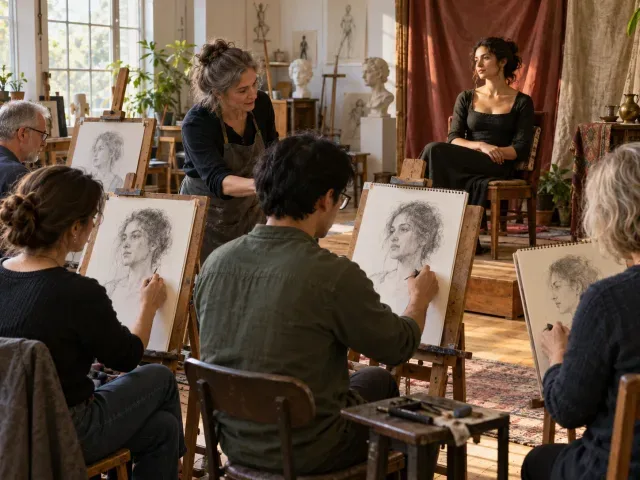
Anatomical life and portrait drawing



An improver-level course combining observational portrait and life drawing with the study of how anatomy shapes visible form.
About this course
This course examines how bones, muscles and fat shape visible form in portrait and life drawing. It gives similar attention to the head and neck and to the figure as a whole, considering proportion, rotation, weight, balance, gesture, motion and likeness. Teaching combines talks, demonstrations, practical drawing, individual tutoring and group discussion. The emphasis is on observation and on distinguishing artistic anatomy from medical anatomy. Learners are encouraged to reflect on their own work and may be encouraged to draw from specimens in medical collections outside class.
What you'll learn
- Distinguish between artistic and medical anatomy
- Analyse how underlying bone, muscle and fat influence proportion, rotation and visible form
- Draw a portrait from different angles using basic anatomical understanding of the head and neck
- Assess how superficial structures change with position and force
- Apply anatomical observation to life drawing and the depiction of likeness
Is this course right for you?
The course is labelled Improver and is intended for learners developing beyond fundamental drawing techniques. Previous experience drawing from the life model would be useful, but no prior anatomy study is expected. Participation includes practical work, group discussions and short written or visual notes supporting demonstrations and hand-outs.
- Experience drawing from the life model would be useful
- Learners should be able to follow simple written and verbal instructions
- Short written notes may be used to support demonstrations and hand-outs
- Group discussion can include showing and discussing work
Before you go
- Basic materials are provided.
- An A4 or similar sketchbook is useful for written or visual notes during demonstrations.
Class teacher
Andrea Voisey
Class teacher
Where this course runs
Upcoming classes
2 classes
Selected date
Tue 2 Feb 2027
18:00 – 21:00 • 8 weeks
£459
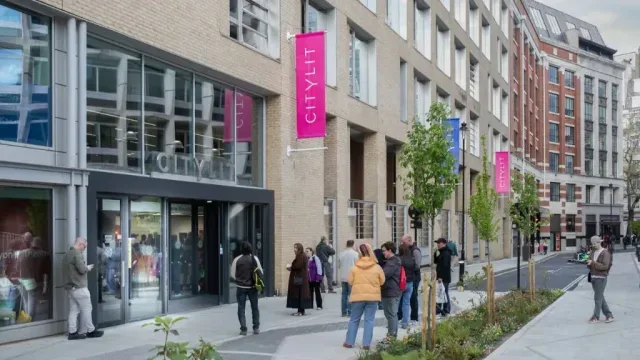
Keeley Street, Covent Garden
Other available dates
| Starts | Schedule | Length | Teacher | Venue | Price | |
|---|---|---|---|---|---|---|
2 Feb 2027 Tuesdays | 18:00 - 21:00 | Short course8 weeks | AndreaVoisey | Keeley StreetWC2B 4BA | £459.00 | Book now |
27 Apr 2027 Tuesdays | 18:00 - 21:00 | Short course8 weeks | AndreaVoisey | Keeley StreetWC2B 4BA | £459.00 |
Tue 27 Apr, 18:00 - 21:00
8 weeks8 weeksTue 18:00£459AndreaVoiseyKeeley Street