Crochet for improvers

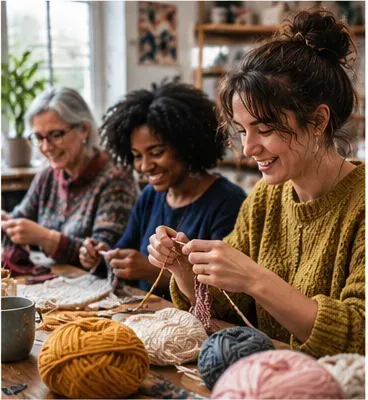

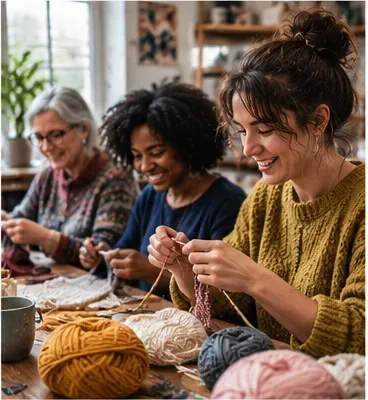
Improver-level crochet course covering shaping, working in the round, advanced stitches, motif construction and pattern reading.
About this course
The course develops crochet beyond basic stitches through techniques including shaping, chevrons and ripples, working in the round, striping, lace, cluster and raised stitches. Participants will also practise joining yarn and motifs, edgings and finishing methods, while beginning to interpret more complex patterns. Teaching combines demonstrations, group and individual tuition, discussion and practical work. Techniques are practised through samples and swatches, which can be kept with handouts and notes in a crochet techniques folder or sketchbook. Course handouts and related information are also stored in Google Classroom.
What you'll learn
- Apply intermediate to advanced crochet stitches, including cluster and raised stitches.
- Shape crochet using chevrons, ripples and other construction techniques.
- Work in the round to create granny squares and more complex motifs.
- Join yarn and motifs, and complete edgings and finishing techniques.
- Read and begin to interpret crochet patterns while considering correct tension.
Is this course right for you?
This course is intended for improver or intermediate crocheters who already know the basic double crochet, treble and half treble stitches. Participation includes demonstrations, practical work, group discussion and individual tuition. Learners should be able to follow written and verbal instructions and use simple measurements and calculations.
- Basic double crochet, treble and half treble stitches are required.
- The course combines group activities with individual tuition and practical practice.
- Learners will be expected to follow handouts and instructions, including health and safety information.
Before you go
- Bring at least one 4mm, 4.5mm and 5mm crochet hook.
- Bring two balls of DK to Aran-weight yarn: one cream or natural colour and one light contrast colour. Yarn containing wool, cotton or another natural fibre is preferred.
- A sketchbook is advisable for collecting visual information, recording techniques and storing handouts. A digital camera may also be useful for recording stitches, fabric and mark-making.
- Log in to Google Classroom before the sessions begin to access course materials.
Class teacher
Claire Montgomerie
Class teacher
Where this course runs
Upcoming classes
1 class
Selected date
Sat 17 Apr 2027
10:30 – 16:30 • 3 weeks
£249
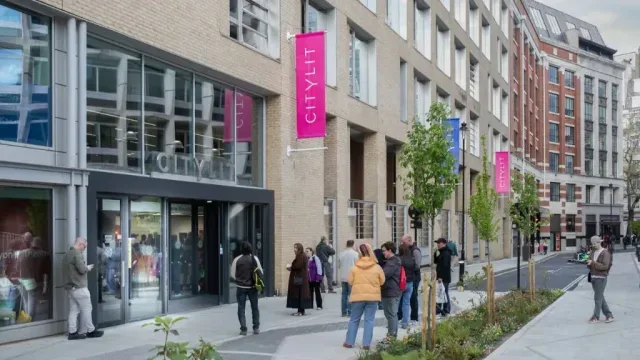
Keeley Street, Covent Garden