Drawing 3


An upper-intermediate drawing course combining observational study with exploratory projects, demonstrations, individual tuition and group discussion.
About this course
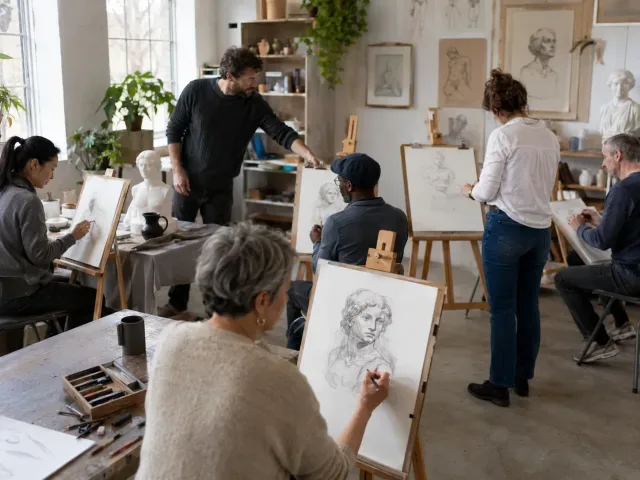
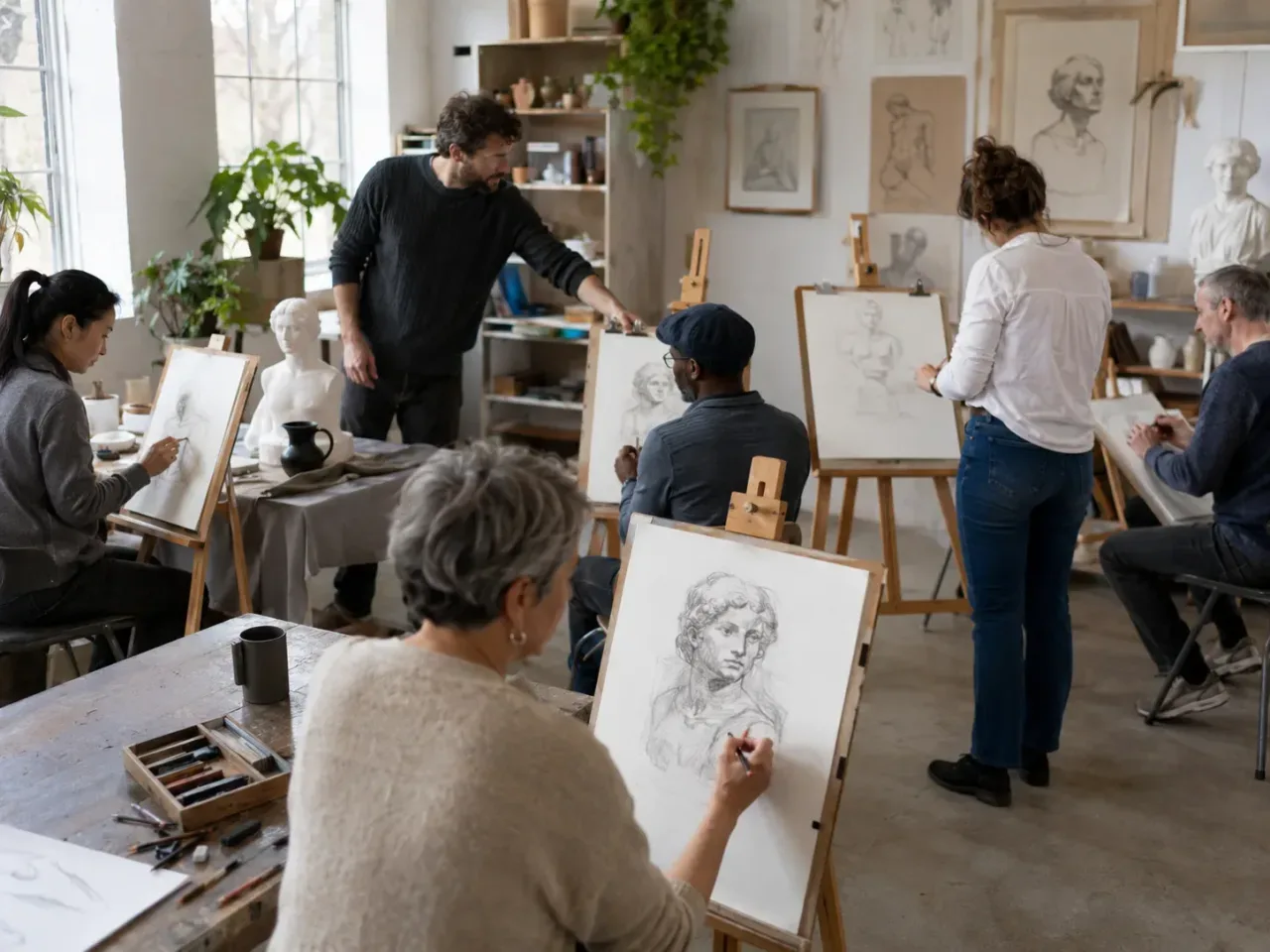
The course develops observational accuracy while encouraging more investigative and expressive approaches to drawing. Participants work on structured projects involving spatial relationships, scale, surface, texture and mark-making, using sketches and preparatory studies to produce more resolved drawings or series. Teaching combines studio practice with demonstrations, handouts, one-to-one guidance and group discussion. Projects may draw on photography, found imagery, collages, models, printed ephemera, textural elements and imaginative processes. Learners are also encouraged to reflect on their own work and maintain a sketchbook to support research and project development.
What you'll learn
- Develop greater accuracy when drawing from observation.
- Use compositional devices and spatial relationships to create visually dynamic drawings.
- Apply scale, surface, texture and mark-making to develop more expressive drawings.
- Extend visual research through photography, found imagery, collages, models and imaginative processes.
- Produce more resolved drawings or a series from sketches and preparatory studies.
- Reflect on personal work and the work of others to inform further development.
Is this course right for you?
This upper-intermediate course is intended for learners who already have experience working from observation and want to extend their individual approach. The source recommends having completed Drawing 1 and Drawing 2, or having around 60 hours of equivalent drawing study. Participation includes studio practice, group discussion and self-reflection.
- Learners are expected to follow spoken and written instructions, demonstrations and health and safety information.
- Optional tasks between sessions can support individual research.
- The course includes discussion of learners' own work and the work of others.
Before you go
- A sketchbook is required for use in class; learners who do not already have one can receive advice about choosing one in the first session.
- Basic drawing materials and resources, including paper, pencils and charcoal, are provided.
- Learners may bring additional specialist materials if they wish.
Class teachers
Amanda Bracken
Class teacher
Brian Sayers
Class teacher
Rod Judkins
Class teacher
Ruth Brison
Class teacher
Sisetta Zappone
Class teacher
Where this course runs
Upcoming classes
4 classes
Selected date
Thu 14 Jan 2027
18:00 – 21:00 • 11 weeks
£479
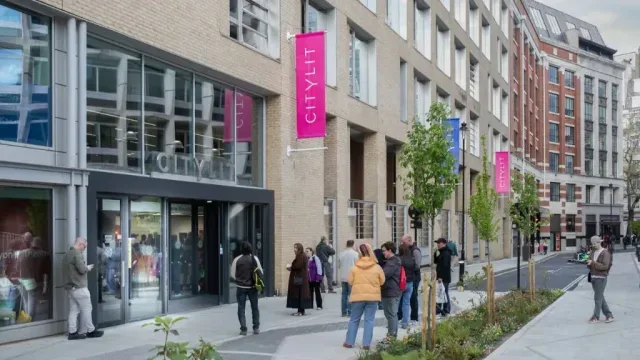
Keeley Street, Covent Garden
Other available dates
| Starts | Schedule | Length | Teacher | Venue | Price | |
|---|---|---|---|---|---|---|
14 Jan 2027 Thursdays | 18:00 - 21:00 | Short course11 weeks | AmandaBrackenSisettaZappone | Keeley StreetWC2B 4BA | £479.00 | Book now |
12 Apr 2027 Mondays | 14:00 - 17:00 | Short course12 weeks | BrianSayers | Keeley StreetWC2B 4BA | £479.00 | |
20 Apr 2027 Tuesdays | 18:00 - 21:00 | Short course11 weeks | RodJudkins | Keeley StreetWC2B 4BA | £479.00 | |
28 Apr 2027 Wednesdays | 10:00 - 17:00 | Short course5 weeks | RuthBrison | Keeley StreetWC2B 4BA | £479.00 |
Thu 14 Jan, 18:00 - 21:00
Book now11 weeks11 weeksThu 18:00£479AmandaBrackenSisettaZapponeKeeley StreetMon 12 Apr, 14:00 - 17:00
12 weeks12 weeksMon 14:00£479BrianSayersKeeley StreetTue 20 Apr, 18:00 - 21:00
11 weeks11 weeksTue 18:00£479RodJudkinsKeeley StreetWed 28 Apr, 10:00 - 17:00
5 weeks5 weeksWed 10:00£479RuthBrisonKeeley Street