Sculpture: material and meaning


An all-levels sculpture course exploring materials, processes and meaning through studio making, demonstrations, discussion and individual feedback.
About this course
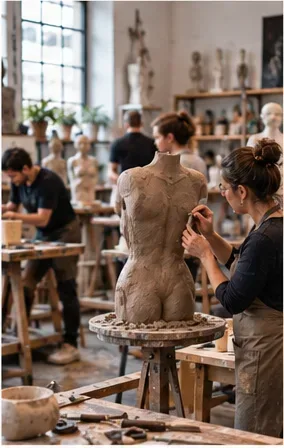
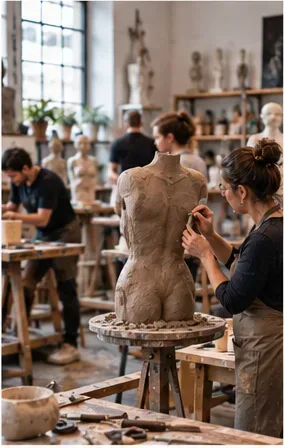
Participants investigate how material, form and process can shape meaning in sculpture, while developing a self-defined approach to making. The course covers armatures, basic forms, idea development, mould making and casting, found objects, non-traditional materials and the completion of a multi-part sculpture. Teaching combines presentations on contemporary sculpture, demonstrations with safety guidance, dedicated studio time, group discussion and individual tutor check-ins. Learners experiment with materials and processes, consider cultural, emotional, political and environmental contexts, and use sculpture as a way to develop ideas as well as make three-dimensional work.
What you'll learn
- Build armatures and other substructures to support three-dimensional forms.
- Apply basic mould-making and casting techniques.
- Use found objects, multiples and non-traditional materials in sculptural work.
- Develop ideas through experimentation with materials, processes and form.
- Consider how material choices and sculptural processes can carry cultural, political and environmental meaning.
- Use basic tools, materials and techniques safely when making three-dimensional artworks.
Is this course right for you?
The course is intended for beginners and learners with some sculpture experience. Its all-levels format combines individual studio work with demonstrations, group discussion, informal reviews and tutor check-ins, so participants work independently while engaging with the wider group.
- Suitable for learners approaching sculpture with different levels of prior experience.
- Includes both self-directed making and discussion of work in progress.
Before you go
- Basic essential materials and equipment are included.
- Bring a notebook or sketchbook, pencils and a pen for recording and developing ideas.
- A camera or smartphone may be useful for documenting work in progress.
- Wear sturdy, closed-toe shoes. Old clothes or overalls are strongly recommended because some materials may stain or damage fabric.
- Personal protective equipment is provided and must be worn where required.
Class teacher
Diana Puntar
Class teacher
Where this course runs
Upcoming classes
1 class
Selected date
Mon 2 Nov 2026
10:30 – 16:30 • 3 weeks
£499
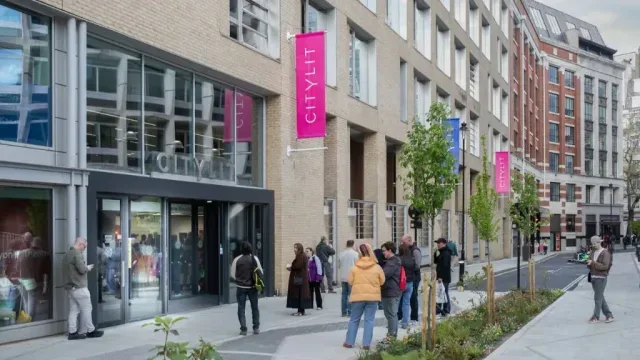
Keeley Street, Covent Garden