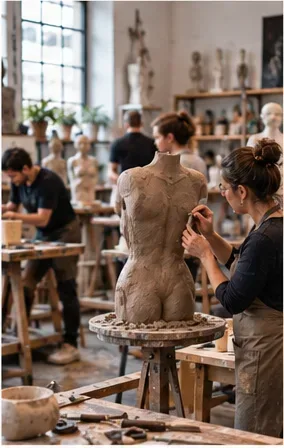
Sculpture: Renaissance reimagined

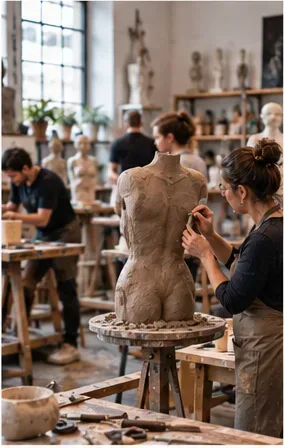

An all-levels sculpture course using Renaissance art as inspiration to develop and cast a pewter relief and wax statuette through demonstrations, discussion and practical work.
About this course
Participants use Renaissance art and objects, including work seen in the V&A’s Renaissance galleries, as sources for developing contemporary sculpture ideas. The course combines museum research, demonstrations, individual and group tuition, pair work and discussion. Learners explore modelling and casting in clay, plaster, pewter and wax while designing two small sculptures: a pewter plaquette and a wax statuette. Practical experimentation, review and discussion support the development of both the relief and three-dimensional work, including the use of moulds and a wire armature.
What you'll learn
- Use art historical references as starting points for sculpture ideas.
- Design and model a small clay relief sculpture.
- Construct a plaster block mould and produce a small pewter cast.
- Build a wire armature and model a small three-dimensional sculpture in clay.
- Create a silicone block mould and produce a wax cast.
- Apply safe working methods when using the course materials and processes.
Is this course right for you?
The course is intended for learners at all levels, from beginners to those with more experience. Participation includes practical work alongside individual tuition, pair work, group discussion and museum-based research. Learners should be able to follow verbal and written instructions, demonstrations and health and safety information, and may be given extension tasks to complete outside class.
- Requires participation in group discussions and collaborative pair work.
- Learners may be encouraged to complete additional or extension tasks outside class.
Before you go
- All materials required for the course are provided.
- Bring a sketchbook, pencils and a pen for sketching and note-taking.
- A camera or smartphone is useful for documenting work in progress.
- Wear sturdy, closed-toe shoes. Old clothes or overalls are recommended because some materials may stain or damage fabric.
- Personal protective equipment is provided and must be worn where required.
Class teacher
Rebecca Stevenson
Class teacher
Where this course runs
Upcoming classes
1 class
Selected date
Sun 13 Jun 2027
10:30 – 16:30 • 6 weeks
£499
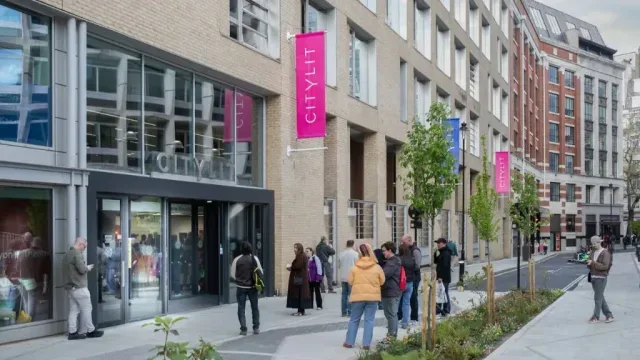
Keeley Street, Covent Garden