The physics of time


A beginner-level lecture course examining timekeeping, relativity, quantum physics and entropy through class discussion and group work.
About this course
The course examines how people measure time, from sundials to atomic clocks, and relates timekeeping to the Earth, Sun and Moon. It then introduces time dilation in special and general relativity, using real-life examples to consider how motion and gravity affect time. Further topics include the behaviour of time for electrons and photons, Planck time and the Big Bang, and the second law of thermodynamics. Teaching is lecture-based, with PowerPoint slides available to download, alongside class discussion and group work.
What you'll learn
- Describe developments in timekeeping and the relationship between calendars and astronomical cycles.
- Explain time dilation and its relevance to everyday situations.
- Explain how gravitational fields affect the passage of time.
- Describe the arrow of time from the perspective of elementary particles.
- State what Planck time is and explain its connection with the Big Bang.
- Explain the second law of thermodynamics and its implications for the evolution of the Universe.
Is this course right for you?
The course is intended for beginners and does not require previous knowledge. The Beginner (A1) label indicates an introductory level. Learners should be prepared to contribute to class discussion and group work, while an open and critical approach to learning is encouraged.
- No previous knowledge is required.
- Includes group work and class discussion.
- Delivered primarily through lectures.
Before you go
- PowerPoint slides will be available for download.
- A notepad and pen may be used for taking notes.
Class teacher
Radmila Topalovic
Class teacher
Where this course runs
Upcoming classes
1 class
Selected date
Sun 15 Nov 2026
10:30 – 16:30 • 1 day
£79
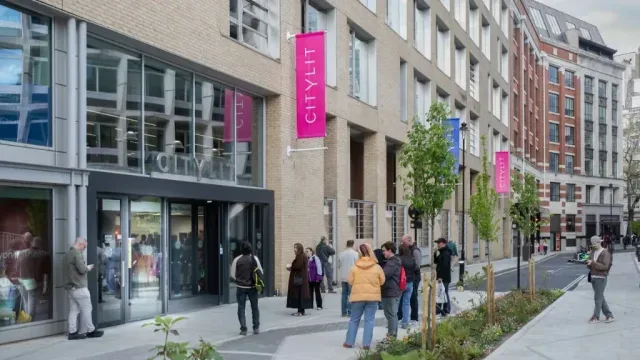
Keeley Street, Covent Garden