
Chinese HSK4 Upper-Intermediate 4


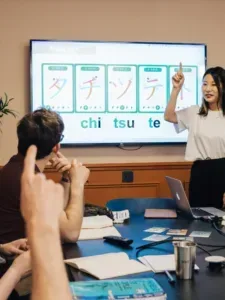

Upper-intermediate Chinese course combining vocabulary development with listening and structured speaking practice on everyday and abstract topics.
What Upper Intermediate (B2) Mandarin means
At B2 Mandarin, learners can communicate fluently on concrete and abstract topics, develop arguments and respond in detail.
Support a viewpoint
虽然这项措施初期需要投入资金,但从长远来看会使整个社区受益。
Although the measure would require initial investment, it would benefit the whole community in the long term.
Discuss an abstract issue
科技让沟通更方便,但也引发了人们对隐私的担忧。
Technology makes communication easier, but it also raises concerns about privacy.
Negotiate a solution
如果把期限延长一周,我们就能在不降低质量的情况下不超出预算。
If we extend the deadline by a week, we can keep the budget without reducing quality.
These are general examples of language use at this level, not a description of any individual course syllabus.
About this course
The course expands Chinese vocabulary through topics including consumption, physical and mental health, success and happiness. Learners listen to native speakers responding to questions in video extracts, including unfiltered language, then formulate spoken answers using their own views and experiences. Discussion questions are more detailed and abstract than basic everyday exchanges, with practice focused on organising ideas and selecting specific vocabulary. The course also provides opportunities to discuss events and related themes in Chinese.
What you'll learn
- Build vocabulary related to consumption, physical health, mental health, success and happiness.
- Understand native-speaker responses to questions in video-based listening activities.
- Formulate spoken answers using specific vocabulary and organised ideas.
- Discuss detailed and abstract questions in Chinese.
Is this course right for you?
This course is intended for upper-intermediate learners who have completed Level 3 or have comparable Chinese ability. The description indicates that participants should be able to converse with ease, read some Hanzi without Pinyin and use key grammatical structures, including aspect, complements, modifiers and special sentence patterns.
- The course is aimed at learners with around 1,000 or more Chinese vocabulary items.
- Learners are expected to have a foundation in important Chinese grammatical structures.
- The provider recommends starting with the lower courses at this level or choosing a class aligned with classmates' ability.
Upcoming classes
No dates available
There are no upcoming dates listed for this class right now. Check back soon, or visit the provider page for the latest schedule.